We are pleased to announce that the new home of CMSI is Veramark Assurance, formerly the Copper Mark.
The Copper Mark recently announced both its evolution to become Veramark Assurance (Veramark) and its evolved Board of Directors. This marks a major milestone for the organisation as it pursues a growing mission to enable responsible mineral and metal production and sourcing at scale. A pillar of Veramark’s work will be to finalise and manage implementation of the CMSI deliverables, including Board approval the Veramark Global Mining Standard (Consolidated Standard) and related documents. For more information, please read the announcement here.
This website will continue to host CMSI documents and information ahead of finalisation, but we will no longer be providing updates here. For the latest news and information, please
- Visit the Veramark website here
- Subscribe to the Veramark newsletter here
- Follow Veramark on LinkedIn here.
For more information or if you have any questions, please contact a member of the Veramark team: info@veramark.org.
CMSI Overview and Terms of Reference
The Consolidated Mining Standard Initiative (CMSI) responds to society’s growing for the responsible production of metals and minerals. It brings together the best aspects of four well-established standards – The Copper Mark, Mining Association of Canada’s Towards Sustainable Mining (TSM), World Gold Council’s Responsible Gold Mining Principles and ICMM’s Mining Principles — into one, global standard that reduces complexity and clarifies responsible practices for mining companies of all sizes, across all locations and commodities.
The Partners’ ambition is to drive impact at scale by enabling the broad implementation of a globally recognised Standard that promotes responsible mining practices and continual performance improvement across the mining sector.
The full Terms of Reference for the initiative can be found here.
CMSI Vision and Objectives
The vision is for a sustainable society, enabled by the responsible production, sourcing, and recycling of metals and minerals. The CMSI objectives are:
- Develop a credible and clear standard.
- Consolidate the four existing responsible standards into one global standard and with multi stakeholder participation which can drive performance improvement at scale.
- Establish clear expectations for responsible practices that span multiple performance areas of concern to stakeholders that apply to all producers committed to responsible practices, regardless of size, commodity, or location.
- Help drive positive outcomes for both people and the environment along individual metals’ value chains – from mining to smelting, refining and beyond.
Development Process
The CMSI process has been led by the four convening Partners and guided by two advisory groups: one comprising industry representatives, and the other bringing together a diverse range of voices from stakeholders including NGOs, investors, Indigenous Peoples, customers and multilateral organisations. Members of these groups worked together to leverage their expertise to support the development of the Standard. The CMSI Partners and advisory group members prioritised decision-making by consensus throughout the process. Learn more about the advisory groups here.
Public Consultations
In line with ISEAL Code of Good Practice for Sustainability Systems, the CMSI included two global public consultations (Q4 2024 and Q4 2025) which resulted in more than 8,000 comments.
All feedback received has been transparently documented, including how it has been considered and incorporated into subsequent iterations of the CMSI deliverables, helping to ensure the CMSI’s products will meet societal needs.
For more information and access to the public consultation drafts, summary reports and verbatim submissions with consent, please visit the pages below.
The Process: Overview
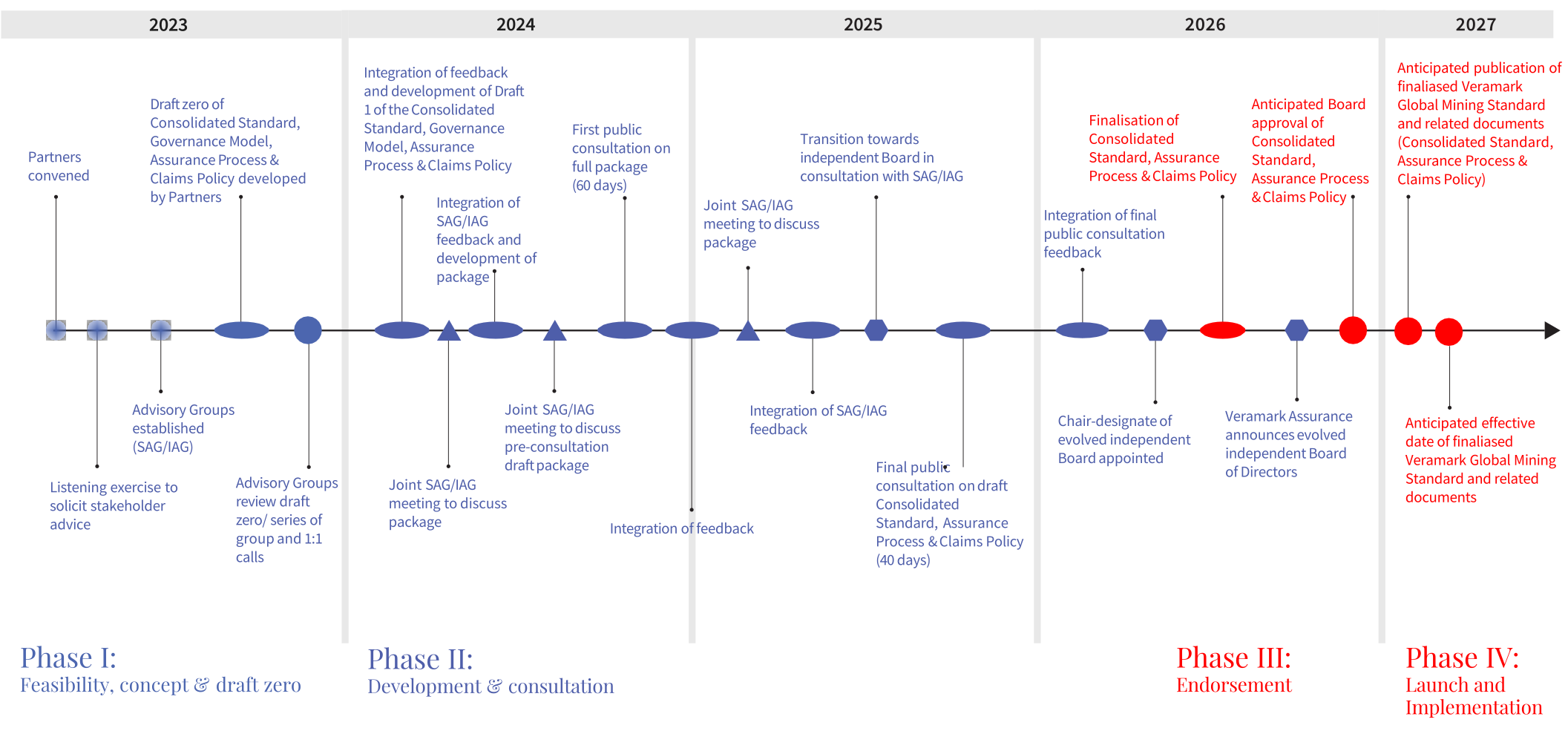
Below is the timeline which details the CMSI process. Items in blue are in the past and items in red are still in progress or to come.
CMSI Components
The Consolidated Standard
The Consolidated Standard brings together the attributes of the four individual standards while eliminating duplication, filling gaps and making improvements where appropriate. It comprises 24 performance areas that cover a wide range of topics related to responsible mining.
Each of the performance areas has requirements grouped into three distinct levels: Towards Good Practice (a starting position of conformance with minimum industry standards); Good Practice (a level of practice in line with industry standards and international norms, frameworks and guidelines), and Leading Practice (a level of practice which goes beyond good practice and demonstrates leadership or best practice). We expect to launch the finalised Standard, the Veramark Global Mining Standard and supporting documents in early 2027.
Governance Model
The Governance Model was published on 8 September 2025 and has now been adopted by Veramark Assurance (formerly The Copper Mark). Veramark’s Board of Directors is solely responsible for approving the final Consolidated Standard, Assurance Process and Claims Policy.
The Board is made up of 17 members: an independent Chair and 16 non-executive Directors divided into four groups of four Directors: mining companies, mining stakeholders, value chain companies, and value chain stakeholders. The Board is chaired by Daniel Ortega-Pacheco, who was appointed Chair-designate earlier this year and has served as a Copper Mark Director in the interim.
- The Governance Model is available here.
- View the Veramark Board here.
Assurance Process
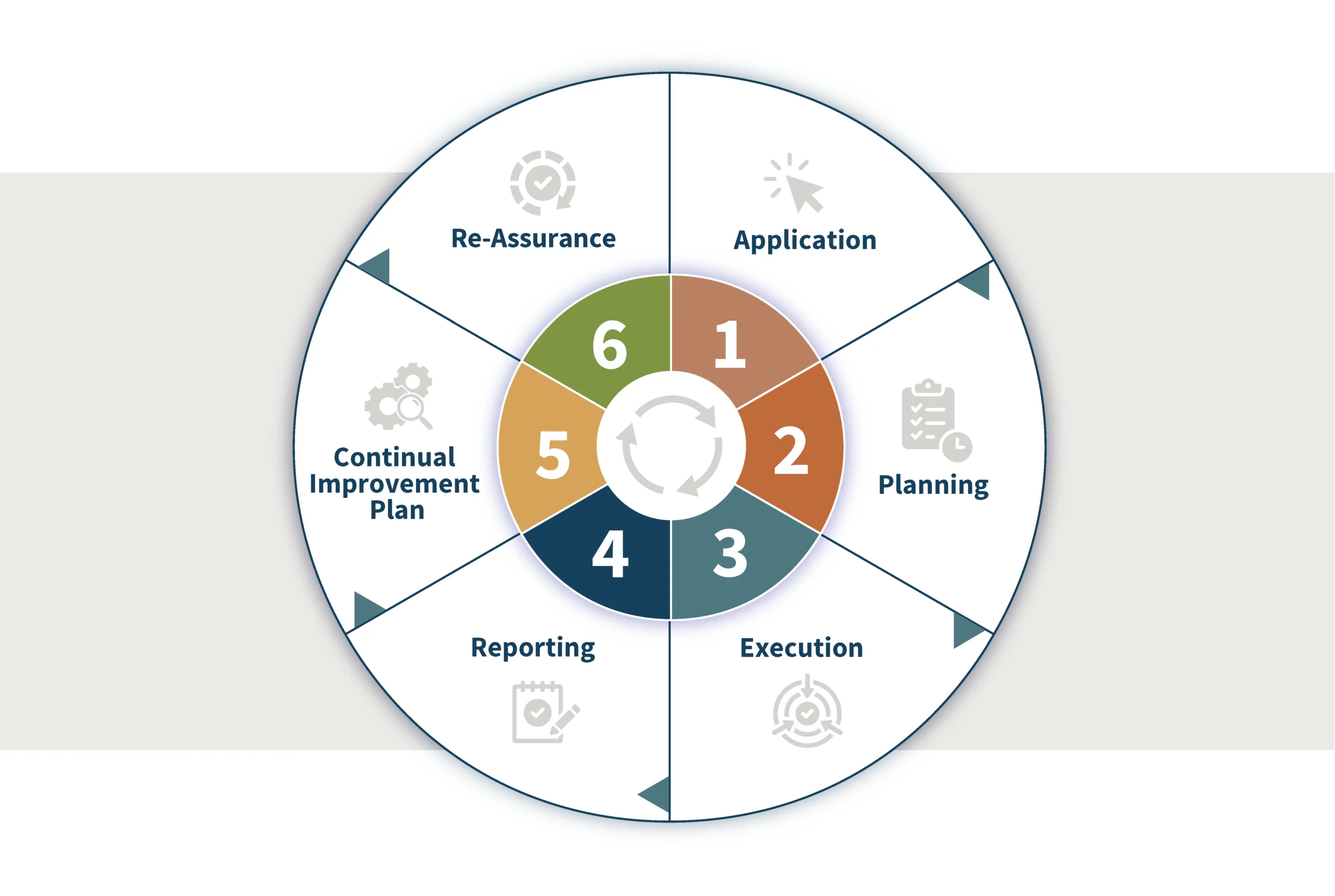
The Assurance Process defines the steps required to provide an independent third-party validation of the status of implementation of the Standard by individual facilities. The process covers six key steps: application, planning, execution, reporting, a continual improvement plan, and re-assurance after three years. This also includes a procedure by which potential disputes between the assurance provider and facility can be addressed, as well as a publicly accessible grievance mechanism for citizens to raise concerns with the assurance process and its implementation. Once published, the Assurance Process Manual will apply to all new standards and revisions of existing standards across Veramark’s suite of standards.
Claims Policy
A claim is any message, logo or imagery used to communicate externally (e.g. via company website, sustainability report etc.) a level of assured achievement against the Standard. The Claims Policy sets this out for implementing facilities and provides the rules and supporting guidance for their effective use. The Claims Policy is critical to ensure that claims related to the Standard are accurate, consistent, transparent and substantiated. This is essential to mitigate the risk of greenwashing. Once published, the Claims Policy will apply to all new standards and revisions of existing standards across Veramark’s suite of standards.